Welcome! I am a contemplative thinker and photographer from Colorado. In this blog, you'll discover photographs that I've taken on my hiking and backpacking trips, mostly in the American West. I've paired these with my favorite inspirational and philosophical quotes - literary passages that emphasize the innate spirituality of the natural world. I hope you enjoy them!

If you'd like to purchase photo-quote greeting cards, please go to www.NaturePhoto-QuoteCards.com .


In the Spirit of Wildness,

Stephen Hatch
Fort Collins, Colorado

P.S. There's a label index at the bottom of the blog.

Tuesday, October 16, 2012

The story of bird migration is the story of promise - a promise to return.


"The story of bird migration is the story of promise - a promise to return."

Narrator, the movie "Winged Migration"

Photo: Migrating Sandhill Cranes, Lory State Park, CO; October 15, 2012.  I love this quote, because it shows that the act of leaving is part of a cycle, one that leads to return.  This is especially important to remember in the realm of spirituality when it seems that the "Muse" of inspiration has left us.

These cranes were part of a flock of several hundred that momentarily circled around and around just above me, before continuing on their flight southward.

Most people guard against going into the fire, and so end up in it.


Most people guard against going into the fire,
and so end up in it . . .
If you are a friend of God, fire is your water.
You should wish to have
a hundred thousand sets of mothwings,
so you could burn them away, one set a night.
The moth sees light and goes into fire.
You should see fire and go toward light.
Fire is what of God is world-consuming.
Water, world-protecting.
Somehow each gives the appearance of the other.
To these eyes you have now what looks like water burns.
What looks like fire is a great relief to be inside.

Jelaluddin Rumi 

Photo: Golden Aster springs from the soil next to the root of a burned Douglas-fir; High Park Burn, Lory State Park, CO; October 13, 2012

Monday, October 15, 2012

Autumn colors mirror the beauty of the human soul.


The vivid colors of autumn mirror the beauty of a human self that - like the Fall - is poised on the border between life and death.  The winter that follows autumn ALWAYS gives way to Spring.  In the natural world, this shift happens but once a year.  In the soul, it occurs during each instant of our lives.

Photo: Prickly-pear cactus fruits, Wild Plum leaves, and Arthur's Rock; Lory State Park, CO; October 15, 2012

Sunday, October 14, 2012

When we harness for God the energies of love, we will have discovered fire for a second time in the history of the world.


"Someday, after mastering the winds, the waves, the tides and gravity, we shall harness for God the energies of love, and then, for a second time in the history of the world, man will have discovered fire."

Teilhard de Chardin

Photo: Fire-roasted Douglas-fir cone against the backdrop of a burned tree; Hewlett Burn, Poudre Canyon, CO; October 12, 2012

Life arises out of death.


“Life rises out of death, death rises out of life; in being opposite they yearn to each other, they give birth to each other and are forever reborn. And with them, all is reborn, the flower of the apple tree, the light of the stars. In life is death. In death is rebirth. What then is life without death? Life unchanging, everlasting, eternal. What is it but death - death without rebirth?” 

Ursula Le Guin 

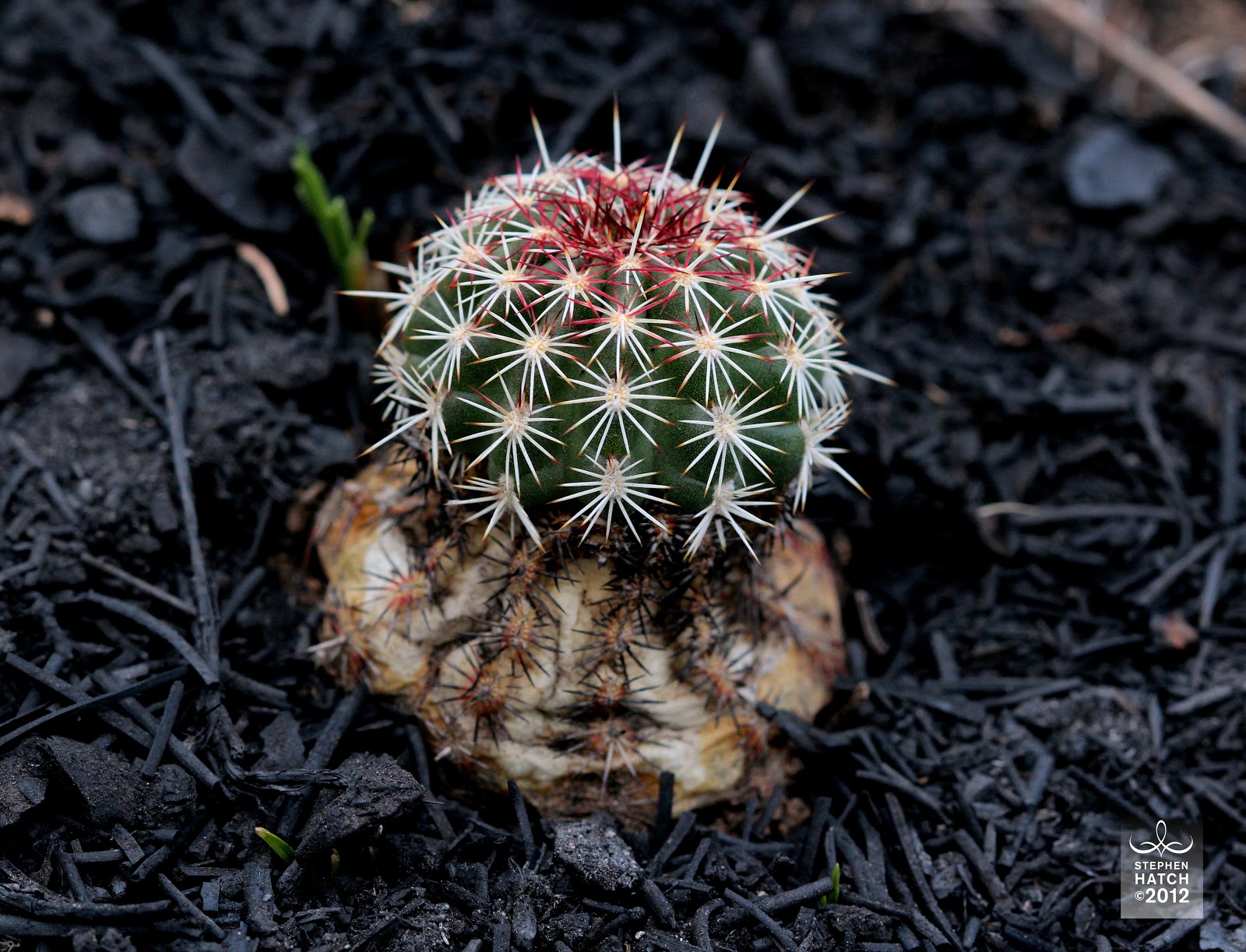
Photo: New growth of a Ball Cactus arises on top of a dead portion of the plant; Hewlett Burn, Poudre Canyon, CO; October 12, 2012 


Saturday, October 13, 2012

The burning of ego is the fuel for insight and enlightenment.


"The ego is the ideal fuel, the fuel that is exciting to burn . . . the best fuel that could be found in the whole universe . . . , the only fuel for wisdom . . . In fact, the very idea of enlightenment exists because of ego . . . Without [the burning of] ego, there wouldn't be the very notion of enlightenment at all."

Chogyam Trungpa,
Tibetan Buddhist rinpoche

Photo: Nodding Sunflower blooming in the Hewlett - High Park Burn; Poudre Canyon, CO; October 12, 2012

Radiance is the core of the Feminine.


"Radiance is the core of the Feminine.  Whether appearing in the vision of a flower, a rainbow, a man or a woman, there is a certain mysterious quality of grace, shine and beauty that can best be described as 'radiance' . . . But it is the inherent radiance of LOVE itself that is the true Feminine core . . . How, then do we magnify our inherent radiance?  By relaxing into our loving heart.  We must learn to let go of our resistances, and give love . . . As we do so, our shine becomes brighter and brighter. The core of the Feminine is this brightness of love."

David Deida

Photo: Golden Aspen trees above Maroon Lake, Maroon Bells - Snowmass Wilderness, CO; September 23, 2012

Friday, October 12, 2012

Light is what love looks like. Love is what light feels like.


"Light is what love looks  like . . . Love is what light feels like."

David Deida

Photo: View from the slopes of Deer Mountain, Rocky Mountain National Park, CO; September 30, 2012

Alpenglow light tinges, permeates, covers and glorifies the mountains.


"The very finest, softest, most ethereal purple hue tinges, permeates, covers, glorifies the mountains . . . How lovely then, how suggestive of the best heaven . . .!"

The Contemplative John Muir, p. 162

Photo: Alpenglow radiates from Long's Peak just before sunrise; Rocky Mountain National Park, CO; September 30, 2012

Thursday, October 11, 2012

Even if we are the most shiftless and craziest of mortals, if we still recognize that we have a genius - a Muse - to consult, then no one may presume to come between us and our genius.


"Talk of fate!  How little one can know what is fated to one another! - what he can do and what he can not do!  I doubt whether one can give or receive any pertinent advice.  In all important crises one can only consult his genius.*  Though he were the most shiftless and craziest of mortals, if he still recognizes that he has any genius to consult, no one may presume to go between him and her.  They, methinks, are poor stuff and creatures of a miserable fate who can be advised and persuaded in very important steps.  Show me a person who consults his genius, and you have shown me a person who cannot be advised.  You may know what a thing costs or is worth to you; you can never know what it costs or is worth to me.  All the community may scream because one person is born who will not do as it does, who will not conform because conformity to him is death, - he is so constituted.  They know nothing about his case; they are fools when they presume to advise him . . . In the course of generations, however, people will excuse you for not doing as they do, if you will bring enough to pass in your own way."

Henry David Thoreau, 1858

Photo: Potentilla leaf, with a formation of the Lumpy Ridge looming in the background; Rocky Mountain National Park, CO; October 8, 2012.  

* For Thoreau, "genius" is a muse who visits us in order to bring us inspiration.  This muse is partly an aspect of our own personality, and partly an independent presence with a reality all its own.

Like a cactus, we are often prickly on the outside and soft on the inside.


Edward Abbey, one of my favorite Nature writers, had a nickname: "Cactus Ed."  Although he liked to say and write provocative things that sometimes made people angry, he had a very soft heart. Inside, Abbey was quite sensitive both to the negative attitudes and actions of other people towards him AND to the heartbreaking beauty of the redrock canyon country of the Four Corners area.  In fact, it was this sensitivity that makes his written descriptions of the area so powerful.

Abbey's nickname is a powerful reminder that whenever we encounter someone who appears prickly on the outside, they are usually protecting a vulnerable inner disposition, a soft heart that is actually quite affected by criticism or slight.  Hopefully, others will remember this principle as well when WE ourselves become frustrating and difficult to live with.

Photo: Prickly-pear cactus, looking toward the edge of the High Park Burn; Reservoir Ridge Natural Area, near Fort Collins, CO; October 9, 2012

People in Western society have an inclination to think in terms of black-and-white, and either-or. They tend to lose sight of the gray areas of life.


"Overall I have found much that is impressive about Western society.  In particular, I admire its energy and creativity and hunger for knowledge.  On the other hand, a number of things about the Western way of life cause me concern.  People there have an inclination to think in terms of 'black-and-white,' and 'either-or,' which ignore the facts of interdependence and relativity.  Between two points of view they tend to lose sight of the gray areas.  Also, with thousands of brothers and sisters for neighbors, so many people appear to be able to show their true feelings only to their cats and dogs."

The Dalai Lama

Photo: Shadowy rocks appear through the mist; Gem Lake Trail, Rocky Mountain National Park, CO; October 5, 2012

Wednesday, October 10, 2012

When we consider that everything we experience results from a complex interplay of causes and conditions, we find that there is no single thing to desire or resent.


"When we consider that everything we experience results from a complex interplay of causes and conditions, we find that there is no single thing to desire or resent and it is more difficult for the afflictions of attachment and anger to arise.  In this way the view of interdependence makes our minds more relaxed and open."

The Dalai Lama

Photo: Ice coats a spider web in a mountain-mahogany bush; Gem Lake, Rocky Mountain National Park, CO; October 5, 2012

Consciousness has the quality of luminosity.


"Consciousness . . . has the quality of luminosity . . . The ultimate nature of mind is essentially pure.  This pristine nature is technically called 'clear light.'  "

The Dalai Lama

Photo: Multi-colored leaves backlit by late afternoon light; Gem Lake Trail, October 15, 2012.  Yes, the leaves REALLY ARE that vivid!

Tuesday, October 9, 2012

Simplicity in all things is the secret of the wilderness and one of its most valuable lessons.


"Simplicity in all things is the secret of the wilderness and one of its most valuable lessons . . . Simplicity goes into the matter of thoughts and objectives . . . When in the wilds, we must not carry our problems with us or the joy is lost.  Never indulge in arguments or bitter recriminations; never criticize, but be of good cheer . . . 'It is not wise to ask too many questions, nor should you yield to the itch for making comments about the journey, a habit which may be cultivated to an excess.  Silence is a safe and discreet plenishing' . . . Keep your thoughts simple; do not be argumentative or meddlesome.  Do not hate, condemn, or criticize; an expedition is too short for that, as is life.  Learn to live simply and all will go well."

Sigurd F. Olson

Photo: Rock and aspen trees; Gem Lake Trail, Rocky Mountain National Park, CO; October 5, 2012.  The surreal quality of this photo was created in part by the dim lighting of a misty day, and by the lightly falling snow.  The quote within the quote is from Fr. LeJeune, a Jesuit who traveled in the North Country.